
Best overall: a lender- or escrow-coordinated mobile signing appointment. Best direct-contact option: Thenauticalnotary, subject to confirming refinance-document handling. Best alternative when travel is unnecessary: an escrow-office signing. This 2026 guide compares those routes for a Long Beach mortgage refinance and explains what to confirm before you book.
- For mobile notary mortgage refinance Long Beach appointments, start with your lender or escrow officer’s signing instructions.
- Thenauticalnotary is a mobile notary public; confirm refinance-package handling before arranging an appointment.
- Choose lender-coordinated mobile signing when document delivery and return instructions need centralized coordination.
- An escrow-office signing is an alternative when you can travel and the closing team arranges it.
- A completed notarization does not establish that your refinance has funded.
Why this matters
A refinance signing is not simply a request for a stamp. Your lender or escrow team controls the loan documents, signing instructions, and return process. The notary performs the required notarial acts; the lender answers questions about the loan terms.
The best appointment is the one your closing team approves before documents change hands. For your 2026 refinance, choose the signing route around that approval—not around an unsupported claim about which provider is fastest.
A notary public commission alone does not establish experience with a complete refinance package. Ask separately about document handling, required signatures, and coordination with the party receiving the completed documents.
What makes the best mobile notary for a refinance?
Use these criteria before choosing a provider. They distinguish an appropriate mortgage-signing arrangement from an ordinary appointment for an individual document.
- Closing-team approval: Your lender or escrow officer confirms who can conduct the signing and how the package reaches that person.
- Refinance-package handling: The provider confirms whether the appointment covers the complete signing package or only specified notarizations.
- Identity requirements: The notary explains acceptable identification before the appointment rather than discovering a problem at the table.
- Document control: Printing, signing instructions, electronic return requirements, and original-document delivery have assigned owners.
- Question escalation: You know whom to contact if a loan term, name, or document conflicts with your understanding.
- Appointment fit: The location works for the signers, and any access requirements are settled before arrival.
Ask for clear answers to each criterion. Do not treat a convenient location as evidence that a provider handles lender-specific instructions.
Refinance signing options at a glance
These are ranked booking routes, not a claim that local providers have undergone comparative testing. The mobile options come first; the office appointment is included so you can decide whether travel-to-you service is necessary.
| Rank and option | Best for | Standout feature | Key limitation |
|---|---|---|---|
| 1. Lender- or escrow-coordinated mobile signing | Borrowers who want closing-team coordination | The closing team arranges the signing and communicates its instructions | You must confirm the location and scheduling arrangements |
| 2. Direct-booked mobile notary | Borrowers who want to arrange the appointment themselves | Direct discussion of the meeting location and notarial needs | Refinance-package handling and lender acceptance require separate confirmation |
| 3. Escrow-office signing | Borrowers who can attend an arranged office appointment | Signing takes place at the office handling the transaction | It is not mobile service and requires travel |
1. Lender-coordinated mobile signing: best for closing coordination
A lender- or escrow-coordinated mobile appointment starts with the party responsible for your refinance. Ask that team to arrange a signing at your preferred location or explain its approved booking process. This route puts document instructions and appointment arrangements in the same conversation.
The advantage is coordination, not a promise of error-free execution. You still need to review your documents and confirm the appointment details.
Lender-coordinated mobile signing pros:
- The closing team identifies its approved signing arrangement.
- You can establish who sends the documents and receives the completed package.
- Questions about lender instructions have a defined point of contact.
- You can request a location that avoids an office visit.
Lender-coordinated mobile signing cons:
- The closing team controls the arrangement rather than leaving every choice to you.
- You must confirm whether your requested location and appointment timing fit its process.
Best for: Borrowers who want the lender or escrow officer to coordinate the signing from document delivery through return.
Ask who contacts you, whether all signers must attend together, and whom to call during the appointment. Also establish whether the signer receives a complete copy of the signed package and how that copy will be delivered.
Verdict: Choose lender-coordinated mobile signing as the default for a complete refinance package.
2. Thenauticalnotary: best for a direct mobile-notary inquiry
Thenauticalnotary is a mobile notary public. That makes the business a relevant contact when you want to discuss a traveling appointment, but the stated service description does not establish mortgage-signing-agent credentials or refinance-package services.
Before booking, describe the request accurately: a mortgage refinance signing in Long Beach, not simply a document that needs notarization. Ask whether the service handles the package your lender requires, then obtain your closing team’s approval.
Direct-booked mobile notary pros:
- You can discuss your preferred meeting location directly.
- You can explain access needs before arranging the appointment.
- You can distinguish a complete loan signing from an individual notarial act at the outset.
Direct-booked mobile notary cons:
- A mobile-notary description does not establish refinance-package handling.
- You remain responsible for confirming lender acceptance and document-transfer instructions.
Best for: Borrowers who want a direct mobile-notary contact and are prepared to confirm the scope with their closing team.
Use a specific inquiry: explain who is providing the documents, whether printing is required, and who expects the originals back. Do not send sensitive loan documents until the lender or escrow officer approves the recipient and delivery method.
Verdict: Hold the booking until the provider confirms the scope and your closing team approves the arrangement.
3. Escrow-office signing: best for borrowers who can travel
An escrow-office signing is an alternative to mobile service when the office handling your transaction arranges the appointment. Ask your escrow officer whether signing at the office is an option and who performs the required notarizations.
This route removes the need to arrange a traveling visit. It does not remove identity checks, document review, or the need to resolve loan questions before signing.
Escrow-office signing pros:
- You can discuss the appointment with the office handling your transaction.
- You do not need to arrange access to your home or another meeting location.
- The office can explain its own process for receiving the signed documents.
Escrow-office signing cons:
- You must travel to the appointment.
- You must confirm that the office arranges the required notarial services rather than assuming it does.
Best for: Borrowers whose closing team offers an office appointment and whose circumstances make travel practical.
Confirm the address, required signers, identification requirements, and appointment contact. If travel is difficult, return to the mobile options instead of treating the office route as automatically preferable.
Verdict: Choose an escrow-office signing when your closing team arranges it and you do not need mobile service.
How these signing routes are ranked
The ranking prioritizes closing-team approval, document control, and a clear escalation contact. Convenience follows those requirements because an appointment at your preferred location still fails its purpose if the signing instructions are unresolved.
For this 2026 guide, the default recommendation is a booking route—not an unsupported ranking of individual Long Beach businesses. Direct booking becomes the right choice after the service scope and lender requirements align.
How to prepare for your refinance signing
Follow this sequence before the appointment. Each step resolves a different source of confusion, from who controls the documents to what happens after the notary leaves.
Confirm approval
Ask your lender or escrow officer whether you can choose the notary or signing provider. Confirm any approval requirements before making a separate arrangement. Get the document-transfer instructions from the closing team, not from assumptions about how another refinance worked.
Check identification
Tell the notary what identification you intend to present. Under California’s notarial identification rules, specified identification documents generally must be current or have been issued within 5 years; acceptable document types and additional conditions matter. The California Secretary of State’s notary guidance is the reference for your 2026 preparation.
Do not assume every government-issued card qualifies. Ask the notary to confirm your particular document before the visit, especially if it is expired or the name differs from the loan paperwork.
Review documents
Compare the loan terms with your expectations before signing. Check names and property information, then direct questions about rates, payment obligations, or loan conditions to the lender or escrow officer. A notary is not your legal or financial adviser.
Arrange access
Choose a location where the signers can participate and the paperwork can be handled without interruption. Explain building-entry procedures or other access requirements in advance. If separate witnesses are required by a document or instruction, confirm who arranges them rather than assuming the notary brings them.
Confirm return
Establish who sends the signed documents back and whether the closing team requires an electronic copy before receiving originals. Ask how completion is confirmed. Keep the signing appointment separate from the lender’s funding confirmation.
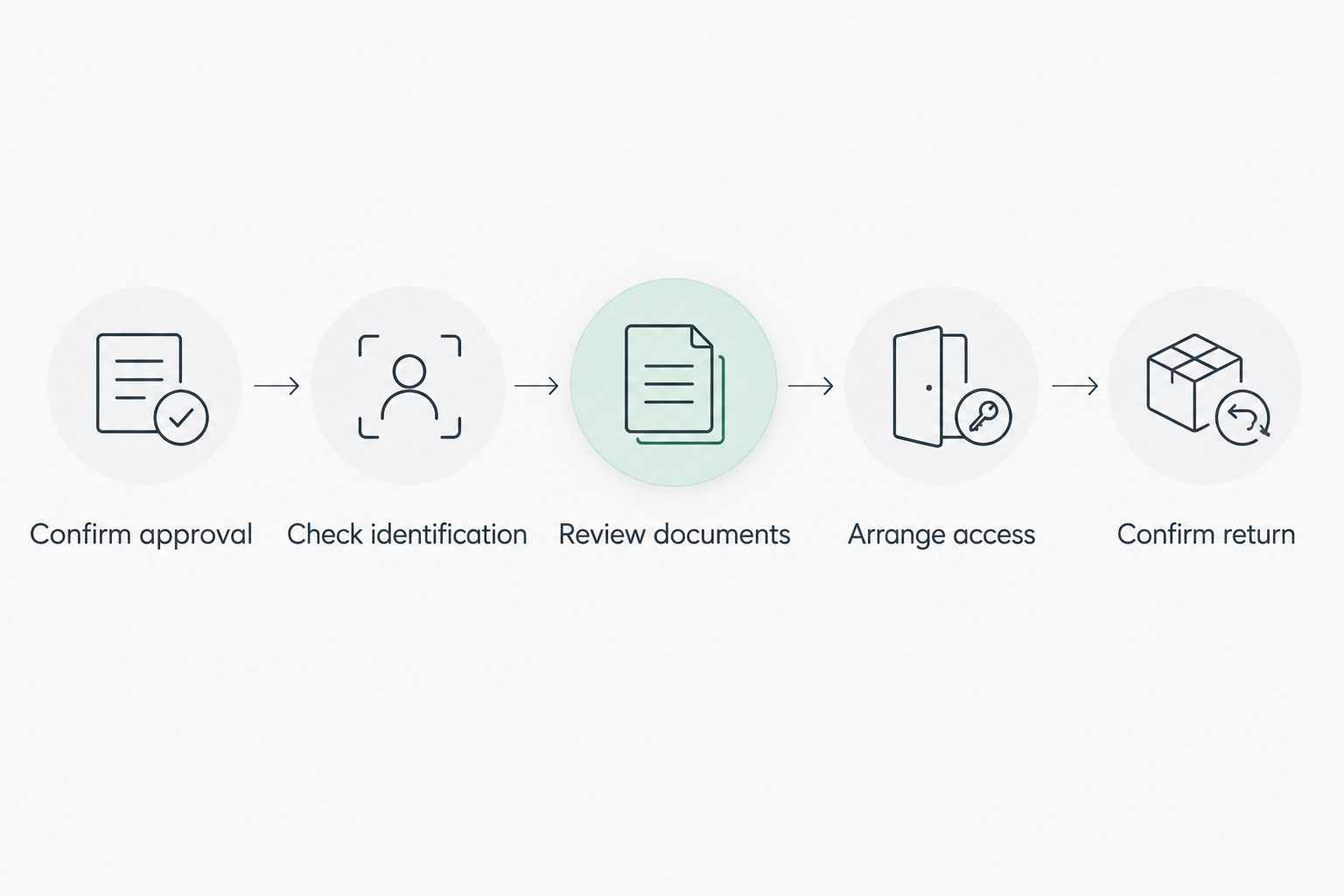
Your preparation is complete when each step has an answer and a responsible contact. An unresolved document question belongs with the closing team before you sign—not in a rushed discussion after the appointment.
Know the difference between signing and funding
For your 2026 refinance, distinguish these events: signing, document acceptance, and funding. A notary’s completed certificate addresses the notarial act. It does not certify that the lender has accepted the package or released funds.
Some refinances secured by a principal dwelling carry a federal right of rescission. Under the Consumer Financial Protection Bureau’s Regulation Z, the applicable period generally runs until midnight of the third business day after the last required triggering event. Saturdays generally count for this rule; Sundays and federal legal public holidays do not.
The rule does not apply identically to every refinance. Ask your lender whether your transaction carries a rescission right and use the transaction’s notices to identify the deadline.
For paper delivery in a transaction subject to rescission, Regulation Z generally requires 2 copies of the rescission notice for each consumer entitled to rescind. The regulation has a separate electronic-delivery provision. If the notice is missing or unclear, raise the issue with the lender rather than asking the notary to determine your rights.
These are federal consumer-credit rules, not a provider’s service promise. Use your closing team’s transaction-specific instructions to establish when signing, rescission, and funding occur.
Which refinance signing option should you choose?
Start with a lender- or escrow-coordinated mobile appointment if you want someone to come to you for a complete refinance signing. It keeps the appointment request attached to the team controlling the documents.
Choose a direct mobile-notary inquiry when you want to arrange the visit yourself and your closing team permits it. Choose an escrow-office appointment when the office offers that route and travel is practical.
For a 2026 booking, use the same deciding question for every option: who is responsible for approving the signer, delivering the package, answering loan questions, and receiving the originals? Book after those responsibilities are clear.
FAQ
What’s the best mobile notary option for a mortgage refinance in Long Beach?
A lender- or escrow-coordinated mobile signing is the best default route for a complete refinance package. Ask your closing team to approve the appointment and explain document delivery and return instructions.
Does Thenauticalnotary handle mortgage refinance signings?
Thenauticalnotary’s stated service is mobile notary public. Confirm complete refinance-package handling directly and obtain your lender or escrow officer’s approval before booking.
Can I choose my own mobile notary for a refinance?
Ask your lender or escrow officer before choosing your own provider. The closing team must explain its approval requirements and how the documents will reach the signing provider.
What identification should I bring to a California refinance signing?
Bring identification the notary confirms is acceptable under California law. Specified identification documents generally must be current or issued within 5 years, and document-specific conditions apply.
Can the notary explain my mortgage rate or change the loan documents?
Direct questions about your mortgage rate or changes to loan terms to your lender or escrow officer. A notary’s commission does not authorize legal advice or establish authority to change your loan agreement.
Does signing refinance documents mean my loan has funded?
No, signing and funding are separate events. Your lender or escrow officer confirms document acceptance, any applicable rescission period, and funding status.
Do I always have three days to cancel a refinance?
No, the federal rescission right does not apply to every refinance. For covered transactions, the period generally runs through midnight of the third business day after the last required triggering event; ask your lender about your specific transaction.
One last thing
Ask whether you are booking notarization of specified documents or handling of the complete refinance package. Those requests are not interchangeable. Thenauticalnotary is a mobile-notary contact; your lender or escrow officer remains the source for approving the refinance signing arrangement.